

Martini’s Human Anatomy, 9th Edition, provides a comprehensive and visually rich exploration of the human body, updated with the latest research as of March 31, 2026․
Overview of the Textbook
Martini’s Human Anatomy, 9th Edition, stands as a cornerstone resource for understanding the intricacies of the human body․ Published by Pearson, and accessible through their catalog (as of March 31, 2026), this edition builds upon decades of established excellence․ It meticulously details the structural organization of the human form, offering a robust foundation for students and professionals alike․
The textbook distinguishes itself through its commitment to clarity and accuracy, presenting complex anatomical concepts in an easily digestible manner․ It’s designed to facilitate a deep understanding of how the body’s components interact to create a functioning whole․ Resources, including potential PDF versions, aim to support diverse learning styles and educational needs, ensuring a thorough grasp of human anatomy․
Target Audience: Students & Professionals
Martini’s Human Anatomy, 9th Edition, is primarily geared towards undergraduate students enrolled in anatomy and physiology courses, as well as allied health programs․ Its detailed coverage and clear explanations make it ideal for those building a foundational understanding of the human body․ However, the textbook’s depth and comprehensive nature also extend its value to practicing healthcare professionals․
Physicians, nurses, physical therapists, and other medical personnel can utilize this resource for quick reference and to refresh their anatomical knowledge․ The availability of digital formats, like a potential PDF, enhances accessibility for busy professionals․ Pearson’s resource (updated March 31, 2026) caters to both academic learning and continued professional development․
Importance of Studying Human Anatomy
Understanding human anatomy is fundamental to numerous fields, particularly within healthcare․ A solid grasp of the body’s structures – as detailed in resources like Martini’s 9th Edition – enables accurate diagnosis, effective treatment planning, and improved patient care․ Whether accessed through a physical copy or a convenient PDF version, anatomical knowledge is crucial․
Beyond clinical applications, studying anatomy fosters a deeper appreciation for the complexity and beauty of the human form․ It provides a framework for understanding physiological processes and the impact of disease․ Resources updated as recently as March 31, 2026, ensure students and professionals have access to current, relevant information for informed practice and study․

Key Features of the 9th Edition
Martini’s 9th Edition boasts thoroughly updated content, reflecting the latest research from sources current as of March 31, 2026, in a readily accessible PDF․
Updated Content & Research
Martini’s Human Anatomy, 9th Edition, presents a significantly revised and updated body of knowledge, incorporating the most current anatomical research available as of March 31, 2026․ This edition reflects advancements in imaging techniques and a deeper understanding of physiological processes․
The content has been meticulously reviewed and revised to ensure accuracy and clarity, building upon the strong foundation of previous editions․ Information sourced from Pearson (published March 31, 2026) and other academic resources guarantees students access to cutting-edge discoveries․ The digital PDF format facilitates easy access to these updates, making learning more dynamic and efficient․ This commitment to current research distinguishes this edition as a premier resource for anatomy students and professionals alike․
Enhanced Visualizations & Illustrations
Martini’s Human Anatomy, 9th Edition, boasts dramatically enhanced visualizations and illustrations designed to deepen understanding of complex anatomical structures․ The PDF version leverages high-resolution imagery, providing exceptional clarity and detail․
New artwork and updated clinical images showcase anatomical relationships with greater precision․ Interactive features within the digital PDF allow students to explore structures from multiple angles and zoom in for closer examination․ These improvements, reflecting Pearson’s commitment to quality (published March 31, 2026), transform the learning experience․ The visual enhancements are strategically integrated with the text, reinforcing key concepts and facilitating effective study, making the 9th edition a truly immersive resource․
Clinical Connections & Case Studies
Martini’s Human Anatomy, 9th Edition, expertly bridges the gap between anatomical knowledge and real-world clinical practice․ The PDF version incorporates numerous clinical connections and compelling case studies, illustrating how anatomical principles apply to disease, injury, and medical procedures․
These features, updated as of March 31, 2026, present relatable scenarios that encourage critical thinking and problem-solving skills․ Each case study is carefully designed to reinforce key anatomical concepts and demonstrate their relevance to healthcare professions․ Pearson’s dedication to practical application ensures students develop a deeper, more meaningful understanding of the human body and its clinical significance, enhancing their preparation for future careers․

Organization of the Textbook
Martini’s Human Anatomy 9th Edition PDF is logically structured, utilizing both a body systems and regional anatomy approach for comprehensive coverage․

Body Systems Approach
Martini’s Human Anatomy 9th Edition, available in PDF format, employs a robust body systems approach, dedicating specific chapters to each major system – skeletal, muscular, nervous, cardiovascular, and more․ This organizational strategy allows students to grasp the intricate functions of each system independently before exploring their interconnectedness;
Each system is presented with a consistent framework, beginning with foundational concepts, progressing to detailed anatomical descriptions, and concluding with clinical correlations․ This method facilitates a deeper understanding of how each system contributes to overall human physiology․ The PDF version maintains this clear structure, enhancing accessibility and study efficiency for students and professionals alike, as evidenced by Pearson’s catalog information․
Regional Anatomy Sections
Alongside the systemic approach, Martini’s Human Anatomy 9th Edition, including the accessible PDF version, incorporates dedicated regional anatomy sections․ These sections shift the focus from individual systems to specific body regions – such as the head, thorax, or limbs – illustrating how anatomical structures integrate within a defined space․
This regional perspective is crucial for understanding clinical presentations, as symptoms often manifest in specific areas․ The PDF format allows for easy navigation between systemic and regional chapters, fostering a holistic understanding․ Pearson’s resource highlights the textbook’s comprehensive nature, and these sections exemplify that, providing a layered learning experience for students and professionals studying human anatomy․
Chapter Structure & Learning Objectives
Each chapter within Martini’s Human Anatomy, 9th Edition, and its corresponding PDF version, is meticulously structured to facilitate effective learning․ Chapters begin with clearly stated learning objectives, outlining the key concepts students should grasp․ These objectives provide a roadmap for study and self-assessment․
Content is then presented in a logical sequence, incorporating clinical boxes that connect anatomical knowledge to real-world medical scenarios․ The PDF’s interactive features enhance comprehension․ Pearson’s catalog details the textbook’s pedagogical approach, and the chapter structure reflects this, ensuring students can efficiently master the complexities of human anatomy, whether studying digitally or with the physical text․

Skeletal System Coverage
Martini’s Human Anatomy, 9th Edition, thoroughly details bone structures, classifications, and the axial/appendicular skeletons, alongside comprehensive joint articulation explanations within the PDF․
Bone Structure & Classification
Martini’s Human Anatomy, 9th Edition, delivers an in-depth exploration of bone composition, meticulously detailing both compact and spongy bone tissues within the downloadable PDF resource․
The text provides a clear classification of bones – long, short, flat, irregular, and sesamoid – explaining their unique structural features and functional roles․ It examines the microscopic anatomy, including osteons, Haversian canals, and bone cells like osteoblasts and osteoclasts․
Furthermore, the 9th edition clarifies bone development processes, encompassing intramembranous and endochondral ossification․ Detailed diagrams and illustrations, readily available in the PDF, enhance understanding of these complex biological processes, making it an invaluable resource for students and professionals alike․
Axial & Appendicular Skeleton Details
Martini’s Human Anatomy, 9th Edition, comprehensively details the axial skeleton – skull, vertebral column, and rib cage – within its accessible PDF format, emphasizing protective functions and structural support․
The text meticulously outlines the individual bones of each region, including cranial and facial bones, vertebrae (cervical, thoracic, lumbar, sacral, coccygeal), and true, false, and floating ribs․ It then transitions to the appendicular skeleton, covering the bones of the limbs, pectoral and pelvic girdles․
The PDF resource provides detailed illustrations and clinical correlations, highlighting key landmarks and potential injury sites, making it a crucial study aid for understanding skeletal anatomy and its clinical relevance․
Joint Types & Articulations
Martini’s Human Anatomy, 9th Edition, thoroughly explores joint types and articulations within its accessible PDF format, categorizing them structurally and functionally for clear understanding․
The text details fibrous, cartilaginous, and synovial joints, explaining their unique characteristics and range of motion․ Synovial joints are further classified based on shape – planar, hinge, pivot, condylar, saddle, and ball-and-socket – with detailed descriptions and illustrative examples․
The PDF resource emphasizes joint stability, movements permitted, and clinical correlations, such as common injuries and disorders affecting these crucial connections within the skeletal system, enhancing practical application;

Muscular System Details
Martini’s Human Anatomy, 9th Edition, in its PDF version, meticulously details muscle tissues, contraction mechanisms, and major muscle groups with functional insights․
Muscle Tissue Types
Martini’s Human Anatomy, 9th Edition, comprehensively explores the three primary muscle tissue types within its detailed PDF format․ Skeletal muscle, responsible for voluntary movements, is examined with a focus on its striated appearance and attachment mechanisms․
Smooth muscle, found in the walls of internal organs, is analyzed for its involuntary contractions and role in processes like digestion; Cardiac muscle, unique to the heart, receives dedicated attention regarding its rhythmic contractions and specialized cellular structure․
The textbook’s PDF version utilizes enhanced visualizations to illustrate the microscopic anatomy of each tissue type, clarifying distinctions in cellular arrangements and contractile proteins․ Clinical correlations further demonstrate how disruptions in muscle tissue function manifest as various pathologies․
Muscle Contraction & Function
Martini’s Human Anatomy, 9th Edition’s PDF delves into the intricate mechanisms of muscle contraction, beginning with the neuromuscular junction and action potential propagation․ It meticulously explains the sliding filament theory, detailing the roles of actin, myosin, and calcium ions․
The textbook clarifies the energy sources powering muscle contraction – ATP – and explores different metabolic pathways involved․ It also examines various types of muscle contractions: isotonic, isometric, and their respective physiological effects․
The PDF format incorporates dynamic illustrations showcasing the steps of contraction, alongside clinical insights into muscle fatigue, cramps, and related disorders․ Understanding these functions is crucial, as highlighted within the comprehensive resource․

Major Muscle Groups & Actions
Martini’s Human Anatomy, 9th Edition’s PDF systematically covers major muscle groups, organizing them by region – head, neck, trunk, and limbs; Each muscle’s origin, insertion, and innervation are clearly defined, facilitating a thorough understanding of their anatomical relationships․
The text details the primary actions of each muscle, including flexion, extension, abduction, adduction, and rotation, often linking these actions to everyday movements․ Clinical boxes within the PDF highlight muscles frequently involved in injuries or pathologies․
Detailed illustrations and tables within the digital resource showcase muscle attachments and lines of pull, enhancing visualization and comprehension of functional movements․ This section is vital for applying anatomical knowledge to real-world scenarios․

Nervous System Exploration
Martini’s 9th Edition meticulously details brain anatomy, spinal cord pathways, and peripheral nerve functions, offering a comprehensive nervous system overview in its PDF format․
Brain Anatomy & Function
Martini’s Human Anatomy, 9th Edition, delivers an in-depth exploration of the brain, meticulously detailing its complex structures and their corresponding functions within the comprehensive PDF resource․
Students will gain a thorough understanding of the cerebral cortex, including its lobes and associated roles in higher-level cognitive processes․ The text elucidates the brainstem’s vital functions, governing essential life-sustaining activities;
Furthermore, the cerebellum’s role in motor control and coordination is thoroughly examined․ The 9th edition utilizes enhanced visualizations to illustrate intricate neural pathways and the interconnectedness of brain regions, fostering a deeper comprehension of neurological processes․ Clinical correlations are integrated to demonstrate real-world applications of anatomical knowledge․
Spinal Cord & Peripheral Nerves
Martini’s Human Anatomy, 9th Edition, provides a detailed examination of the spinal cord’s structure and function, accessible within the comprehensive PDF format․ The text clarifies the organization of gray and white matter, highlighting the pathways for sensory and motor information transmission․
Students will explore the spinal nerves and their branching patterns, understanding how they connect the central nervous system to the periphery․ The book meticulously details the components of the peripheral nervous system, including cranial nerves and their specific roles․
Clinical case studies illustrate the impact of spinal cord injuries and peripheral nerve damage, enhancing understanding․ Enhanced visuals aid in tracing nerve pathways and comprehending the intricate network of the peripheral nervous system․
Sensory & Motor Pathways
Martini’s Human Anatomy, 9th Edition, meticulously details the complex sensory and motor pathways within the human nervous system, readily available in its PDF version․ The textbook clarifies how sensory receptors detect stimuli and transmit signals to the brain for interpretation․
It thoroughly explains motor pathways responsible for initiating and coordinating movement, tracing their routes from the brain through the spinal cord to effector organs․ Clinical correlations illustrate the effects of pathway disruptions, like stroke or spinal cord injury․
Enhanced illustrations and diagrams within the PDF facilitate visualization of these intricate pathways, aiding comprehension of neurological function and dysfunction․

Cardiovascular System Insights
Martini’s Human Anatomy, 9th Edition, comprehensively explores heart structure, blood vessel networks, and circulation, all detailed within the accessible PDF format․
Heart Structure & Circulation
Martini’s Human Anatomy, 9th Edition, delivers an in-depth examination of the heart’s intricate structure, detailing its chambers, valves, and the layers of the cardiac wall, all readily available within the digital PDF․
The textbook meticulously traces the pathways of pulmonary and systemic circulation, explaining blood flow through the heart and its connection to the vast network of blood vessels․
Students gain a clear understanding of how the heart functions as a pump, driving blood throughout the body to deliver oxygen and nutrients․ The 9th edition’s PDF format allows for easy navigation and focused study of these vital cardiovascular components, enhanced by detailed illustrations and clinical correlations․
Blood Vessels & Blood Flow
Martini’s Human Anatomy, 9th Edition, comprehensively details the structure and function of arteries, veins, and capillaries, easily accessible within the digital PDF version of the textbook․
The text elucidates the principles governing blood flow, including blood pressure, resistance, and factors influencing venous return․ Students will explore how these vessels form intricate networks, delivering oxygenated blood and removing waste products from tissues․
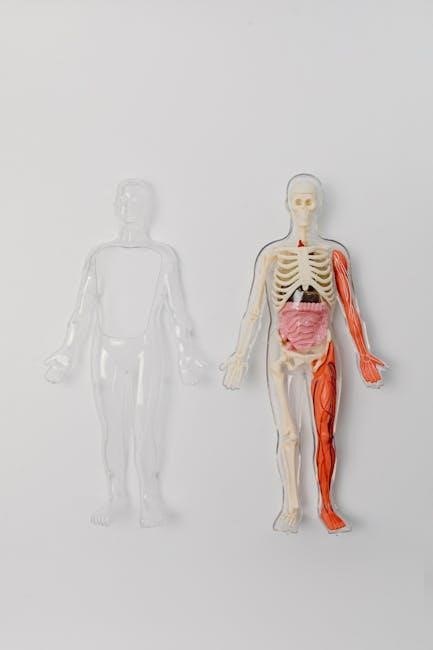
The 9th edition’s PDF provides detailed diagrams illustrating blood flow pathways and the unique characteristics of each vessel type, alongside clinical insights into vascular diseases and their impact on circulation․ This allows for a thorough understanding of the cardiovascular system․
Cardiac Physiology & Regulation
Martini’s Human Anatomy, 9th Edition, thoroughly examines the intricate mechanisms controlling heart function, readily available within the accessible PDF format of the textbook․
The text details the cardiac cycle – atrial and ventricular systole and diastole – and the electrical events governing heart rate and rhythm․ Students will learn about the roles of the sinoatrial (SA) and atrioventricular (AV) nodes, and the conduction system․
The 9th edition’s PDF offers clear explanations of hormonal and nervous system regulation of cardiac output, alongside clinical correlations to common cardiovascular conditions․ This provides a robust understanding of the heart’s complex physiology․